Cultivating community and creating change
Evidence leads to impact
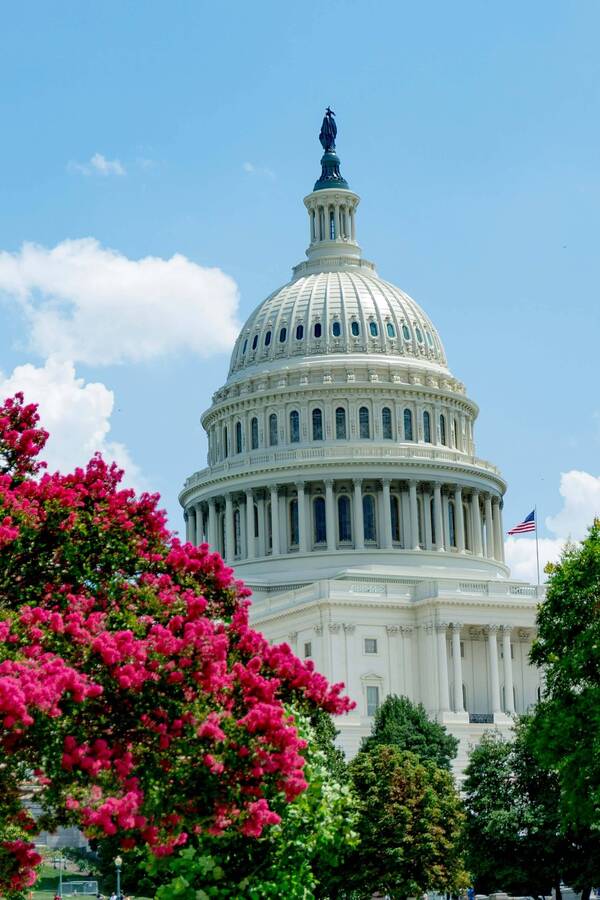
The Evidence-Based Grantmaking Act, introduced this January, is one of the strongest pieces of evidence-based policymaking legislation since the 2018 Evidence Act.
The bill aims to improve the way federal grants are invested, ensuring tax payer dollars fund effective programs. This would ensure that federal agencies:
- Build and use evidence to guide funding decisions
- Set clear, measurable outcomes for programs
- Evaluate what’s delivering results - and what’s not
- Direct resources toward proven strategies, and away from consistently ineffective ones
Indiana Representative Rudy Yakym notes, “There is broad, bipartisan consensus that federal programs should be more accountable and results-driven, and this bill is a vital step in that direction.”
“The Evidence-Based Grantmaking Act builds on the Evidence Act of 2018 by helping agencies focus dollars and efforts on evidence-based programs proven to improve the lives of those experiencing poverty,” said Jim Sullivan, co-founder of LEO and professor of economics at the University of Notre Dame. “When funding follows evidence, more communities can benefit and more lives can change.”
Evidence leads to impact.
To learn more, visit bit.ly/EvidenceBasedGrantmaking
Building government and research partnerships that matter

Our latest Evidence Matters webinar provides practical tips for government and non-profit workers seeking research partnerships.
Moderator Vincent Quan (J-PAL North America) and panelists Patrick Turner (LEO), Louise Geraghty (J-PAL North America), and Carrie S. Cihak (Public sector) had a candid conversation on government and research partnerships.
Research and collaboration go hand-in-hand. LEO faculty Patrick Turner reflected on the importance of researchers and partners defining the study together: “It really is this co-creative process of trying to find overlap on where there’s research interest on the question, and then working towards how we can best overlay research evidence on top of that.”
Public sector evidence leader Carrie S. Cihak encouraged government partners to feel confident in their part of the research process, “It’s part of human nature to be problem solvers, and that’s really what research is all about.”
J-PAL North America government partnerships lead Louise Geraghty reminded workers who are part of a program’s day-to-day operations that the foundation for the study is built on their lived experience: “You’re the expert, you know your community, and the researchers that you’re working with are looking to you as such.”
Watch the recording at https://bit.ly/evidencematters10lessons
Introducing LEO champions
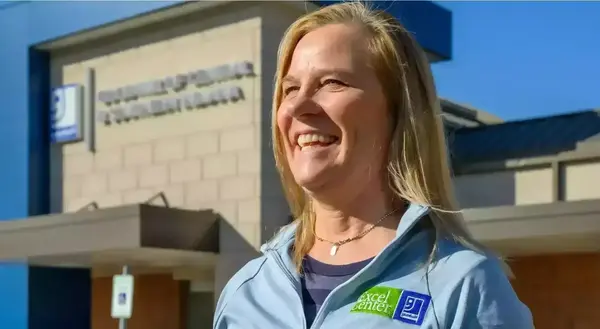
LEO is building meaningful relationships with non-profit leaders, data stewards, agency officials, elected representatives, and advocacy groups.
At LEO, we believe those closest to the problem are closest to the solution.
Our goal is to establish champions in each of our priority states, ensuring we have people on the ground ready to use our evidence to advocate for change. Champions help us advance our mission by using our evidence, introducing us to their network, and testifying for state policy change.
One of our strongest champions in the policy space is Betsy Delgado, senior vice president and chief mission and education officer at Goodwill of Central & Southern Indiana. Together, Betsy and LEO have advocated for education policy change in 12 states and Washington D.C. This has allowed for the expansion of Goodwill Excel Center to 50 sites.
To learn more about LEO’s policy work, connect with our assistant director of policy and scale Emily Giel at egiel@nd.edu
Happening In Your District

Happening In Your District is an effort to engage with lawmakers, agency officials, and staffers about LEO partners in their area.
These targeted email campaigns provide updates on the creation and use of evidence throughout the project lifecycle. LEO’s policy and scale team shares a quick overview of LEO project milestones including the start of the research process, preliminary results, published papers, and replication efforts. Our hope is that these campaigns can be one more way for LEO to build rapport as a trusted source of truth in the fight against poverty.
If you want to stay up to date with what’s happening in your district, visit bit.ly/HIYDUpdates to get updates for your area.
LEO partners highlighted in The Science of Second Chances

Our rigorous impact evaluations with partners are informing evidence on criminal justice reform.
In The Science of Second Chances: A Revolution in Criminal Justice economist and LEO affiliated researcher Jennifer Doleac highlights how Johnson County Mental Health Center Brief Jail Mental Health Screen and Catholic Charities of the Archdiocese of Chicago Homelessness Prevention Call Center reduced recidivism.
Brief Jail Mental Health Screen connects jail inmates to mental health care. LEO’s study shows this intervention at such a critical time in a person’s life reduced the likelihood of another booking within a year by 17%.
Catholic Charities Chicago’s Homelessness Prevention Call Center provides emergency financial assistance for housing. LEO’s study found this support reduced new arrests by 5.6 percentage points among individuals with past criminal justice involvement. This overall effect includes a large decline in violent crime arrests, including for battery.
Visit bit.ly/ScienceofSecondChances to read Jennifer Doleac’s groundbreaking approach to criminal justice reform.
Results for America highlights Padua

In 2015, Catholic Charities Fort Worth created Padua - a client led program designed to help people permanently exit poverty.
Padua has a holistic case management system. Every client has a two-person case management team, who they work with closely to achieve their personal, employment, and education goals.
LEO has been with Padua since the beginning. Our rigorous impact evaluation found that Padua participants were 67% more likely to be employed full-time (among those unemployed at start of program) and 46% more likely to see an increase in monthly earnings, compared to a control group. LEO has led the effort to replicate the program in South Bend, Indiana and additional locations coming soon.
Visit bit.ly/RFAPadua to learn more from Results for America’s latest case study on Padua.